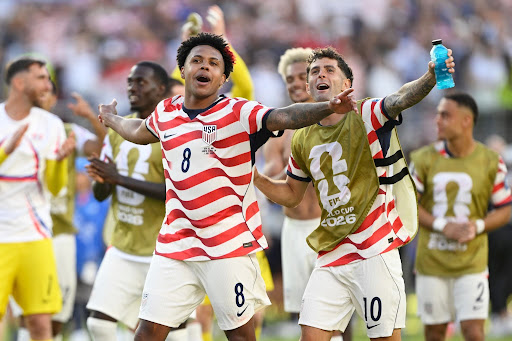



A Supreme Court ruling upholding state bans on transgender girls and women competing on female school sports teams has renewed attention on policies affecting transgender students in school and collegiate athletics.
A divided Supreme Court ruled on June 30 that states may regulate gender identity in school sports, including barring transgender girls and women from competing on girls’ and women’s teams, according to the National Constitution Center.
At the University of North Florida, Director of Athletics Nick Morrow declined an interview, saying UNF Athletics follows all mandated rules and has “nothing else to add.”
Twenty-nine states currently have laws or policies barring transgender students from competing on sports teams that align with their gender identity, while 21 states do not, according to the National Constitution Center.
Changing regulatory landscape
Several major rules and laws currently dictate the participation and daily lives of transgender students at the university level:
- Safety in Private Spaces Act: Enacted in 2023, this Florida law criminalizes individuals using public restrooms or changing facilities that do not correspond to their sex assigned at birth. Because the law applies to public buildings, it mandates that state universities like UNF restrict access to campus bathrooms and establishes a trespassing offense for violations under Senate Bill 1521.
- DEI Funding Ban: Passed in May 2023, this legislation barred public universities in Florida from using state or federal funds for Diversity, Equity, and Inclusion (DEI) programs. This law resulted in the mandatory shuttering of university-sponsored LGBTQ centers across the state university system, under Senate Bill 266.
- Fairness in Women’s Sports Act: Passed in June 2021, this Florida law bans transgender girls and women from competing on female sports teams in public high schools and colleges, establishing birth-certificate gender as the state standard for participation under Senate Bill 1028.
- NCAA Policy Shift: In February 2025, the NCAA Board of Governors adopted a strict, sweeping policy that supersedes previous hormone therapy exceptions. This policy explicitly bans student-athletes assigned male at birth from competing on women’s teams, with no waivers permitted, according to the NCAA.
Personal accounts of identity and sport
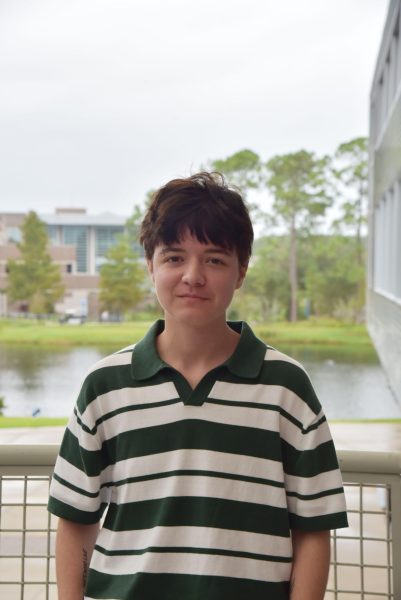
For transgender athletes like Max Fernald, a junior psychology major at UNF, he said navigating the sports world is highly complex.
Fernald, who trains in wrestling, judo, taekwondo, and muay thai, said he often “flies under the radar” because public concerns and laws generally target transgender women rather than transgender men.
“They don’t even think about trans men existing,” Fernald said. Fernald said he made his high school boys’ wrestling team without disclosing that he is a transgender man.
“I made the boys wrestling team in high school without telling them that I was transgender because, why would I do that?” Fernald said.
When his coaches and teammates found out, Fernald said it was the “worst experience of my life, genuinely.”
He said that it was “terrifying and infuriating” to have people in charge in an environment where aggressive behavior was welcome and encouraged.
Although coaches could not legally remove him for being a transgender man, Fernald said his presence inadvertently led to the creation of a girls’ wrestling team at the school.
He attributes much of the opposition he faces to sexism and misogyny, saying that many people do not expect trans men to be capable of competing in aggressive, male-dominated sports.
Today, Fernald said he chooses to remain closeted within his sports to maintain safety and connections.
“If I could be out and have no problem in my sport, I would, but being out would be dangerous, technically, and it would just put me at risk for losing my team and connections,” Fernald said.
Instead, he said he tries to use his influence from the inside to encourage younger teammates on his MMA team to be more accepting and less hateful, he said.
“I would say I’m definitely, at the end of the day, I’m with the trans community,” Fernald said. “Like, point blank, those are my people.”
As a transfer student, Fernald has yet to participate in any sports at UNF, but he said he plans to do so in the fall.
Student need for institutional advocacy
The impact of recent policies and the overall campus climate extends beyond the athletic fields, according to Raven Oketch, a UNF junior biomedical sciences major.
“I personally have felt like I’ve had to keep my transness a secret to focus on getting my degree out of fear of receiving backlash,” Oketch said.
They also said that they have not used a bathroom that matches their gender expression at school, which has added a “bit of discomfort” to their day.
Oketch said they believe the university is doing what it can, but pointed out that the loss of the LGBTQ Center has affected queer students at UNF. Given the center’s absence, Oketch said queer and transgender students need explicit backing from the university.
In May 2024, to comply with state regulations banning funding for DEI programs, UNF closed the LGBTQ Center, along with its Women’s, Interfaith, and Intercultural Centers.
“I think just having blatant support is very important,” Oketch said. “Saying that [UNF] supports ‘all students of different backgrounds’ is great, but I believe that at a time when we’re under attack is the time to make it clear where it stands on trans students.”
Despite these systemic and social challenges, Oketch said they have found community and resilience.
Oketch said that since expressing their queerness and transness more openly, they have found more queer people on campus and begun attending events hosted by the UNF Pride Club.
“Ironically, something that keeps me motivated is forcing myself to express myself how I want,” Oketch said. “It was hard for so long, but I have found so much joy in doing so despite the attacks against us, and that gives me so much hope.”
UNF administration on policy impact
Although Spinnaker reached out to UNF Athletics for an interview regarding trans athletes at UNF, Morrow declined the request.
“There is no need for an interview,” Morrow said in an email. “UNF follows all state and federal laws, as well as NCAA rules governing UNF’s sports programs. We have nothing else to add.”
Regarding club and intramural sports, Spinnaker also reached out to Heather Kite, director of operations in the Recreation and Wellness Department, but has not received a response by the time of publication.
___
For more information or news tips, or if you see an error in this story or have any compliments or concerns, contact [email protected].