
UNF faculty are afraid.
Some faculty hesitate to teach from textbooks they’ve assigned for years. Many avoid difficult in-class discussions altogether. Others now want to leave the institution they once chose above all others—but why?
For many, the fear began with DeSantis’ anti-Diversity, Equity and Inclusion legislation, SB 266, which shut down Florida universities’ support offices like UNF’s LGBTQ Center and Women’s Center in 2024. For others, it began in 2022 when Florida adopted a new posttenure review policy, which puts senior professors’ job security up for debate every five years.
Now, years later, faculty at UNF say this legislation and its subsequent regulations have created a chilling effect for educators. It’s led some faculty to remove all-things DEI from their instructional materials, lectures and syllabi—even when the state rules have never specified explicit instructions to do so.
“It’s a very different atmosphere than 17 years ago when I first started at UNF,” said Madalina Tanase, UNF faculty union president and education professor.
Tanase explained that when she first started at UNF, there was a sentiment that professors were autonomous and could make more decisions about what they did or did not teach. This sentiment was consistent with what five other UNF faculty members of different disciplines said this summer.
“We are moving in a very dangerous direction with censorship and academic freedom,” said Tanase. “The worst part of it is the self-censorship.”
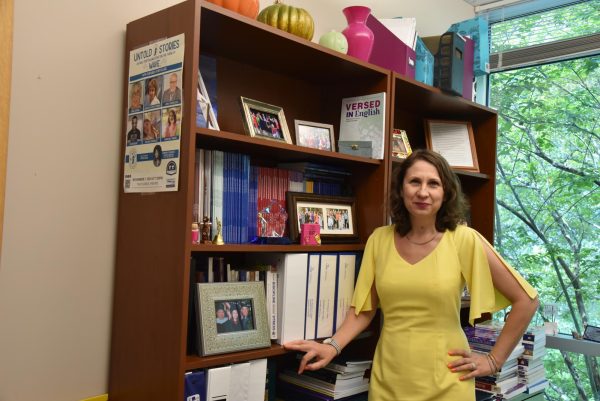
Madalina Tanase is the president of UNF’s faculty union UFF-UNF and a professor in the Teaching, Learning & Curriculum department.
Censorship in the classroom
Paul Parkison, another tenured education professor at UNF, said he’s noticed an increase in fear among faculty members, especially when it comes to what is said and taught in the classroom.
“There’s a lot of anxiety around the impact of fear on the conversations we have, the materials we want to teach in class, on the things that we want to put in our curriculum vitae that we turn in for review,” Parkison said.
Parkison said that because of recent legislation, it’s becoming more common for professors to overthink or hesitate before responding to students or facilitating in-class discussions. He said that while these moments may seem small, they negatively impact instruction and cause students to second-guess themselves.
“[When] you hesitate or you take a breath and you think, ‘Well, what’s going to be a consequence of this?’—That moment in itself makes that student start to question who they are and the questions they’re asking. And that’s miseducative,” Parkison said.
George Rainbolt, former dean of the College of Arts and Sciences and philosophy professor at UNF, said legislation like SB 266 has put educators in Florida and nationwide in a state of government censorship.
“What has happened in Florida… in the last two or three years, is that we’ve had government censorship,” Rainbolt said. “It’s the sense that if you say certain things, you’ll lose your job. And so people are very concerned about that.”
“There’s definitely fear among faculty at UNF about the administration stepping in,” Rainbolt said. “That is a fact.”
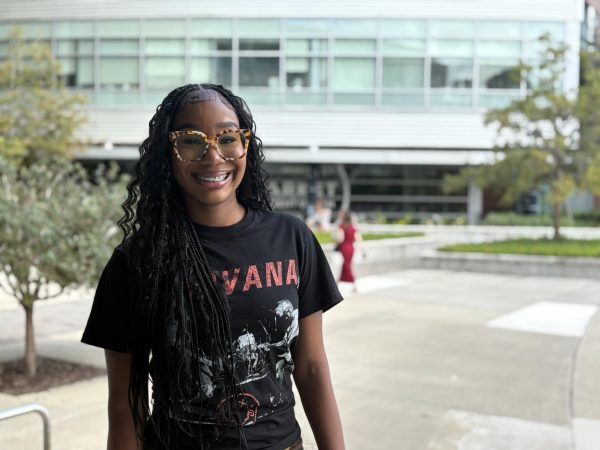
Daisia Carter, freshman nursing student at UNF.
Like Parkison, Rainbolt said he’s noticed that students hesitate to ask questions or stay quiet during discussions. He said he feels students worry about what others will think, which has proved true, according to two UNF students.
Daisia Carter, a freshman nursing student at UNF, said while she’s usually not one to hold back during class discussions, a lot of her classmates tend to opt out.
“I feel like people are… scared to express what they feel because they don’t know what to say, or they don’t feel like they’re in a space to ask the questions they want to ask,” she said.
Amelia Amarrador, a senior marketing major at UNF, said she avoids class discussion if she can help it.
“I’ve never felt the need to voice my opinion in that regard,” Amarrador said. “I’m afraid how the professor will react to it.”
“Whenever someone voices their opinion in class, I’m like, ‘We don’t want to hear this,’” Amarrador said.
The power of the tenured professor
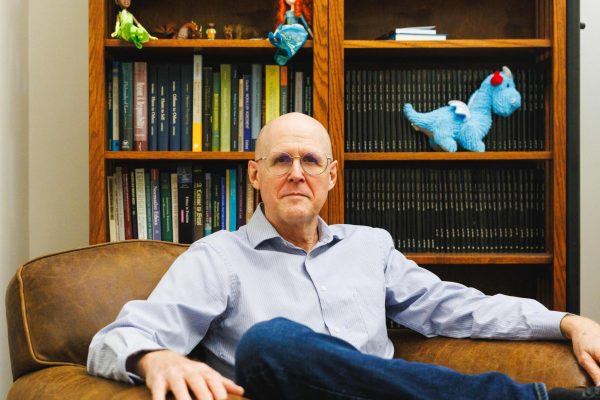
George Rainbolt, a professor in the Teaching, Learning & Curriculum department and former Dean of the College of Arts and Sciences.
Tanase, Parkison and Rainbolt all agree that professors everywhere are afraid of government overreach into their instructional methods and materials. However, all three also agreed to be interviewed for this story mainly because they have a protection that not all faculty have: tenure.
“There is some caution among faculty… who are not tenured,” Parkison said. “I feel like it’s part of my responsibility as a faculty member of rank to share [this] with you. Because some legitimately can’t.”
One non-tenured professor did, however, share his own experience with self-censorship as an educator. He’ll be referred to as Smith, a pseudonym to preserve anonymity, which was granted to protect him from potential retaliation.
Smith is an associate professor in the College of Arts and Sciences at UNF. Although he qualifies each year, he hasn’t yet been granted a tenure professorship. Like other professors, Smith said the last few years of anti-DEI legislation and directives in Florida have changed the way he teaches.
“I’ve been hesitant to even reference anything that might be deemed ‘political’ because it seems that I’d be a target to, well, get rid of,” Smith said.
Over a decade ago, when Smith first started teaching, he said professors seemed to be thought of and treated much differently.
“Professors kind of had this autonomy and that seems to be going away… It definitely is an attack on education,” Smith said. “Those in my position are super reluctant to speak out about it.”
“The opportunities to connect current events to classroom discussion is kind of lost in my profession,” Smith said. “I think the student body is moving in the right direction, in that they are speaking out for what they believe in. It just sucks that some faculty don’t feel like they can encourage this.”
Smith said the pressure to leave out important political and historical events from his instruction has led him to search for teaching opportunities outside Florida.
When first asked about his future at UNF, he said, “I’m actively looking for other opportunities in blue states.”
In response to some of the concerns raised by faculty, a university spokesperson provided the following official statement:
“UNF is a public institution governed by the State University System of Florida, and we are committed to fostering a culture of care and transparency with our faculty, staff and students. We communicate information regularly and actively address concerns raised by members of our campus community while we remain in full alignment with state requirements. We encourage faculty with specific concerns to reach out to their department chairs.” – UNF spokesperson.
“We can read between the lines, though,” he said, as he deleted the word ‘politics’ from a course description on one of his syllabi. “I don’t want it to be used later to get rid of my course—or of me.”
___
This story was featured in Spinnaker’s Fall 2025 magazine and was first published on Sept. 24, 2025. Contact [email protected] for comments, questions or concerns.