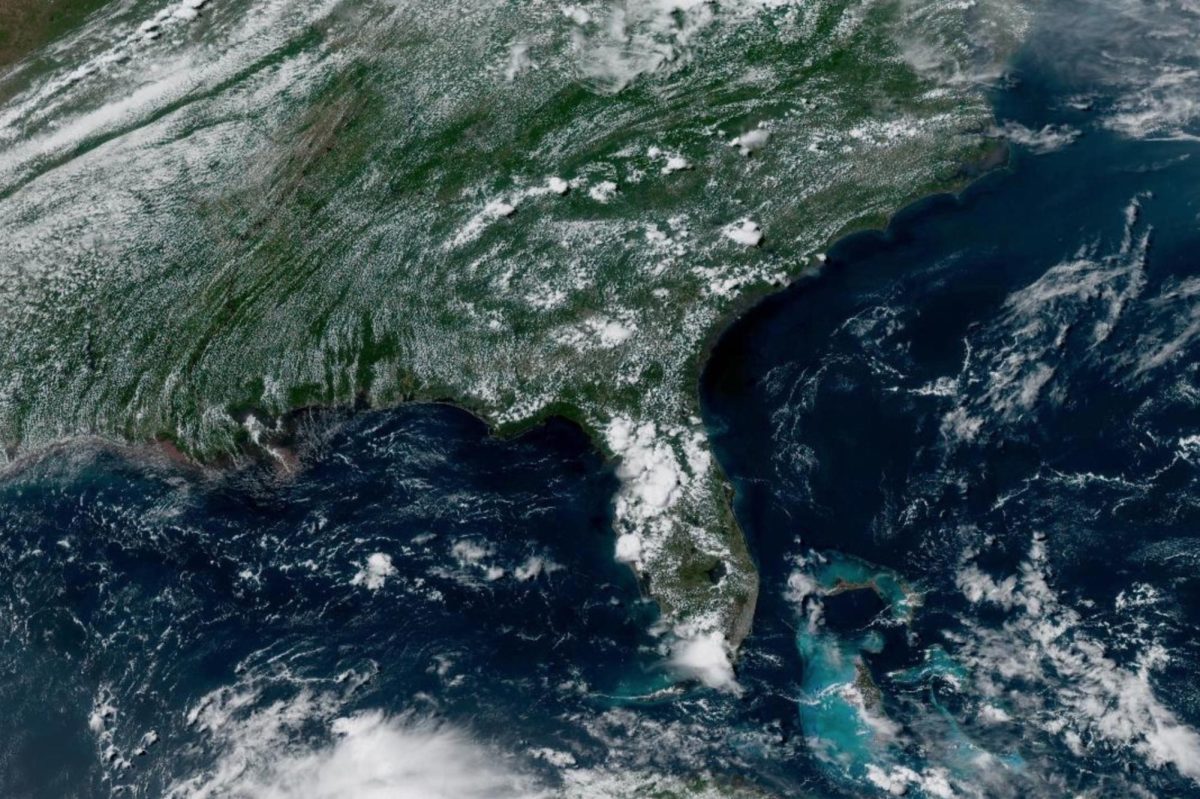



Following the St. Johns River Management District’s issuance of a Phase 2 water-shortage declaration mandating heightened restrictions due to extreme drought and low groundwater levels, the University of North Florida has stepped up its conservation efforts to navigate one of the state’s most severe droughts in over a decade.
Beyond simple mandates, UNF has implemented a multi-layered sustainability approach, utilizing its reclaimed water systems and data-driven leak detection to ensure the campus remains a leader in environmental conservation, according to UNF’s Assistant Director of Campus Sustainability William McMahon.
UNF water usage
With the National Integrated Drought Information System reporting that 864,263 people in Duval County are affected by the drought, UNF’s navigation through the drought relies on the JEA reclaimed water system.
Reclaimed water is highly treated wastewater that meets strict standards imposed by the Florida Department of Environmental Protection.
Using reclaimed water significantly reduces the amount of freshwater withdrawn from the Florida aquifer and decreases the volume of treated wastewater discharged into the St. Johns River, according to McMahon.
“For campus irrigation, approximately 95% of the water UNF uses comes from JEA’s reclaimed water system, and for every gallon of reclaimed water used for irrigation, one gallon of potable water remains in the aquifer,” said McMahon.
UNF receives reclaimed water through two locations, which supply most of the campus’s irrigation needs.
Campus irrigation and drinking water
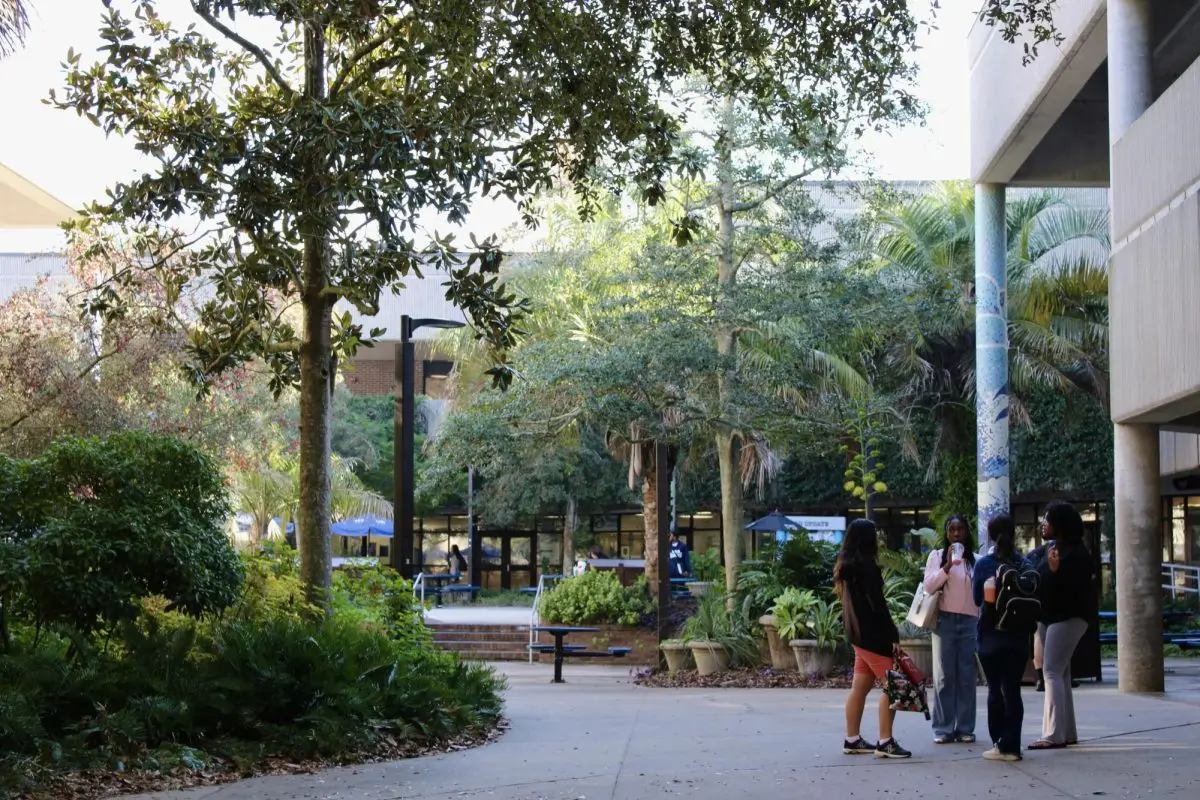
Located on the Sawmill Slough Preserve, UNF is intentional in the design and maintenance of the campus landscape.
“The University follows the ‘Right Plant, Right Place’ principle, which matches plant species to site conditions such as soil type, sunlight, and water availability,” said McMahon.
According to McMahon, this approach promotes healthy growth while minimizing the need for irrigation, pesticides, and fertilizers.
McMahon also credited the incorporation of drought-tolerant and Florida-Friendly plants across campus to UNF Botanical Garden Horticulturalist Rhonda Gracie.
“[The plants] require little to no supplemental irrigation once established,” said McMahon.
UNF currently has 14 gardens on campus recognized by the Florida-Friendly Landscaping (FFL) program for their sustainability and water efficiency, with each receiving Silver, Gold, or FFL Natural designations, according to McMahon.
One example is the Bioswale Garden, located between UNF Drive and the Science and Engineering Building, which does not rely on campus irrigation because it houses native and Florida‑friendly plant species.
In addition to irrigation, UNF prioritizes the efficient use of drinking water across campus.
“UNF has installed sub-meters across campus, allowing our Physical Facilities Department to monitor water consumption at the building level,” said McMahon.
This system enables the Physical Facilities staff to identify abnormal usage and detect leaks early.
According to McMahon, this approach often prevents the loss of hundreds or even thousands of gallons of water per leak with just over 100 water meters installed across campus.
What can we do?
While UNF’s initiatives significantly reduce water use, students, faculty, and staff also play an essential role in conserving water resources during this historic drought, according to McMahon.
He said that, even though they have detection systems in place, reporting leaks as soon as possible is one of the most important actions individuals can take.
“Even a leak that may seem inconsequential, such as two gallons per hour, can amount to over 300 gallons of water lost over the course of a week,” McMahon said.
___
For more information or news tips, or if you see an error in this story or have any compliments or concerns, contact [email protected].