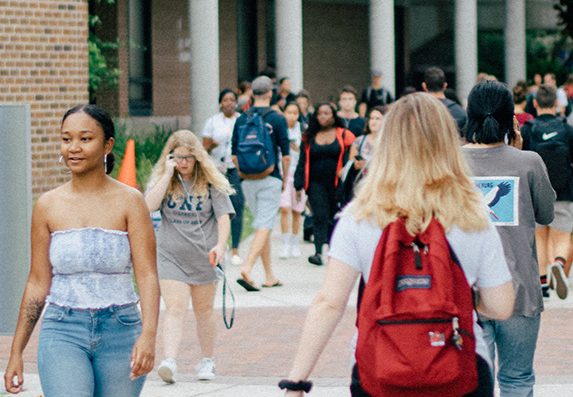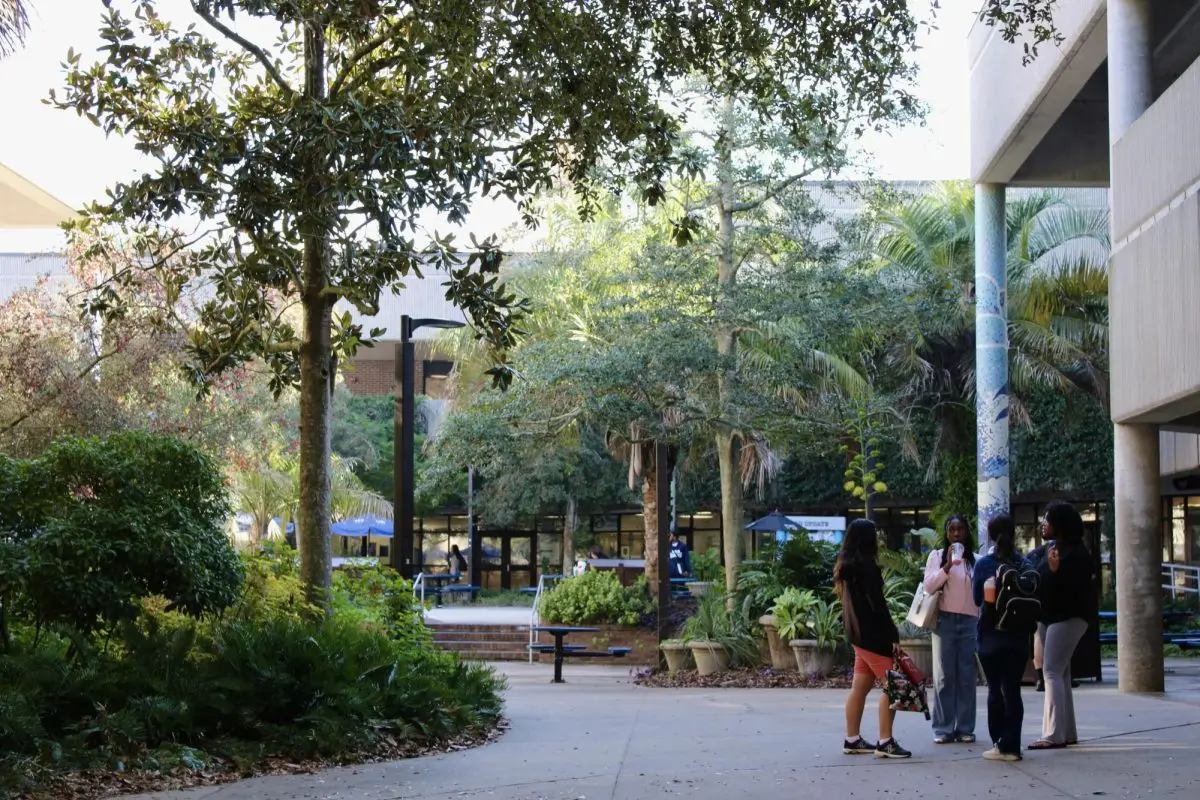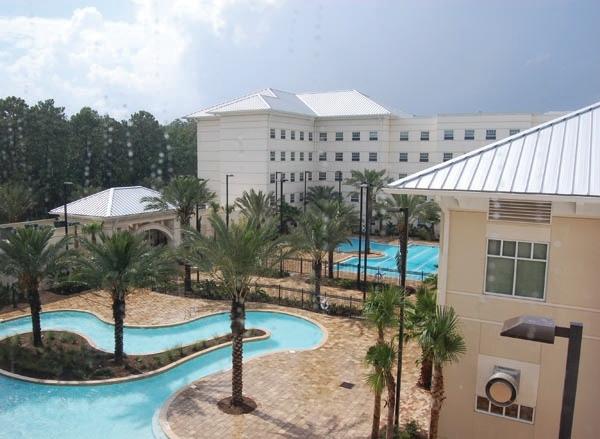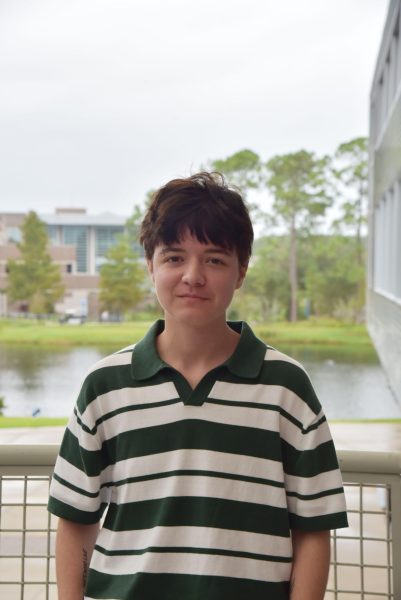



The On-Campus Transition program at UNF provides young adults with intellectual disabilities with auditing opportunities, weekly academic advising, access to academic mentors, and more to support their transition into adulthood. (RJ Kinard)
The Arc Jacksonville’s On-Campus Transition Program (OCT) celebrates its 20th year, partnering with the University of North Florida to provide transformative college experiences for young adults with intellectual differences.
The program allows students ages 18-26 to transition into adulthood by fully immersing themselves in college life, fostering independence within a supportive environment.
Communications Manager at The Arc Jacksonville, Heydi Ortiz, spoke about the program’s importance and how it creates opportunities for belonging, connection, and leadership across campus.
For UNF students like Will Parker, currently in his third year, the OCT program has been life-changing, his mother, Stephanie Parker, said.
Finding the program
Originally from Tampa, Parker’s family sought a program where he could “go away to college” like his older brother, according to his mother Stephanie Parker.
“More and more programs like this are coming online because there are a lot of kids with autism, severe ADHD and just neurological differences that require a different program,” said Stephanie Parker.
The Parker family found the OCT-UNF program as an Inclusive Post-Secondary Education (IPSE) option listed on the “Think College” website a couple of years after Will’s high school graduation.
“We knew that we were going to want to have something college-like for him,” said Stephanie Parker.
Will Parker, who attended Pepin Academy, a charter school for students with learning differences, has since blossomed at UNF, gaining significantly more independence than he had at home, his mother said.
“He had a great experience there [Pepin] and we wanted him to have a college experience much like we had always planned for him,” said Stephanie Parker. “He’s blossoming at UNF.”
How does the program work?
Instead of a traditional academic major, OCT students follow a unique, customized plan focused on key areas: academic enhancement, career development, university life, health/personal growth, and independent living/community life.
Will Parker’s focus is on work experience and daily independent living skills, covering practical fundamentals such as budgeting and grocery shopping. While he attends UNF classes, he audits them, meaning he does not take tests or receive grades.
Currently, Will Parker is auditing environmental and history courses that align with his interests. According to Will, the classes are very “cool” and he learns new things every day.
Will Parker has also leveraged the campus environment by living in Osprey Fountains for three years, a perk of the OCT program.
This accessibility to campus allows Parker to walk to the Student Union and the Green, two spots he says he enjoys spending his time between classes.
The size of UNF, with approximately 21,000 students, also provides a more manageable environment for Will Parker than that of massive universities, according to Stephanie Parker.
“I honestly think to put my kiddo in a university with 50,000 or 60,000 students would be a little overwhelming,” said Stephanie Parker.
As the program marks its 20th year, Ortiz said it continues to encourage and empower students to act as self-advocates and choose their profession after graduating from the OCT program.
“The program creates opportunities for belonging, connection, and leadership across campus,” said Ortiz. “Many students may already see OCT students around campus, in their classes, or at local spots in Jacksonville without realizing the purpose and impact of the program”.
For Will Parker, he said he hopes to get a job at an animal shelter after graduating, with his love for animals stemming from two of his own, including a cat named Lovie.
___
For more information or news tips, or if you see an error in this story or have any compliments or concerns, contact [email protected].