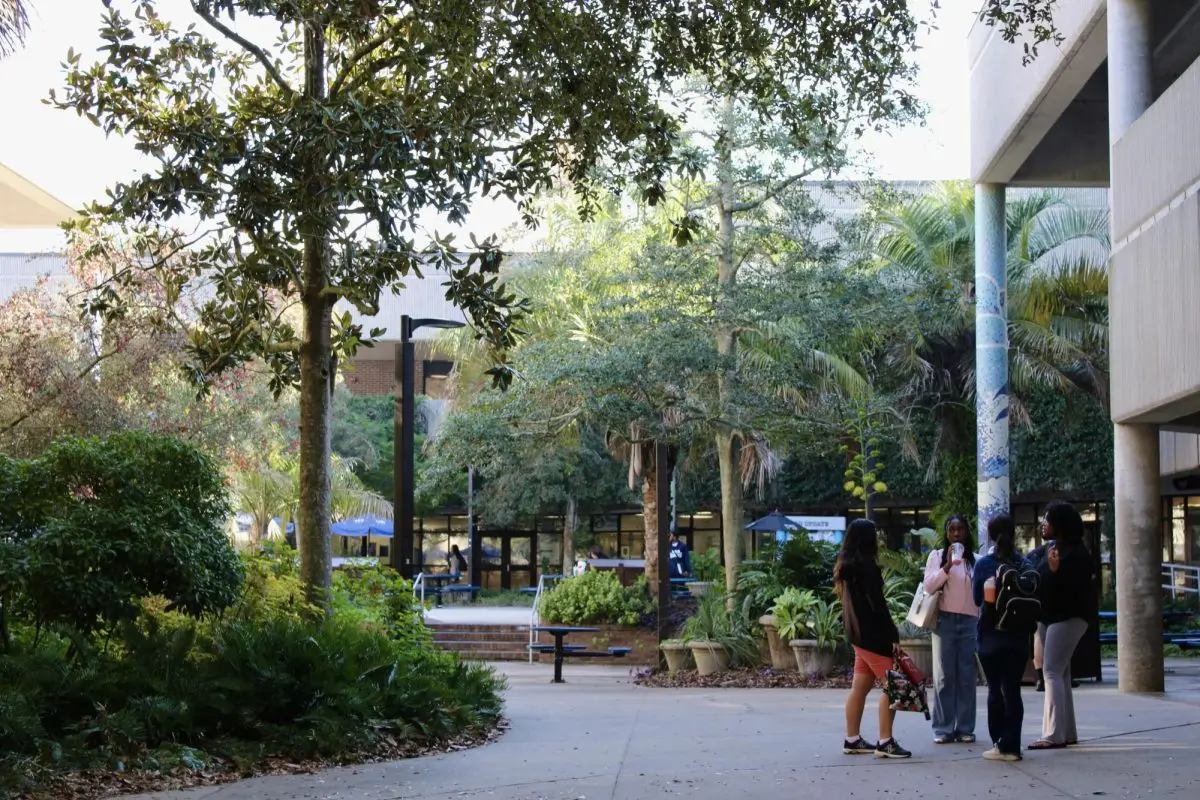



Rising gas prices are pushing students at the University of North Florida to cut back on travel, work more hours and rethink daily routines as the cost of commuting continues to climb.
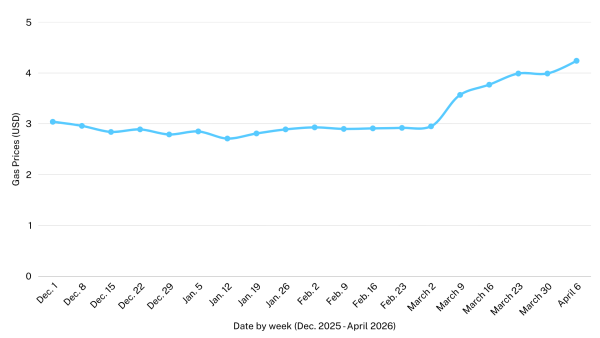
The national gas price increase started after the U.S. and Israel attacked Iran on Feb. 28. Iran then closed the Strait of Hormuz, which acts as a major pathway for shipping crude oil globally. The closure of the strait created uncertainties in gasoline production, raising domestic prices.
According to GasBuddy, the average gas price in Jacksonville is over 94 cents higher than last year’s average.
Impact on students
Rising gas prices are affecting students at UNF, forcing some to reduce campus involvement, work more hours and limit everyday travel as commuting costs increase.
Emma Ramsay, a UNF student and National Association for the Advancement of Colored People board member, said rising gas prices have forced her to attend fewer NAACP events.
Although she lives on campus, Ramsay commutes daily to work and other obligations. She now works or attends classes every day to offset higher gas costs.
“I even don’t find it feasible to drive to the grocery store sometimes,” said Ramsay. “It’s easier to just walk to campus and go to Lend-A-Wing.”
Lend-A-Wing is an on-campus food pantry open to students. The service helps provide meals to students who struggle to afford them and has seen an increase in usage since Fall 2024.
According to Lend-A-Wing Director Anjali O’Toole-Gupta, there is no definitive link between the recent increase in food pantry usage and the spike in gas prices.
“We have seen a steady rise in student usage overall, but this trend began when Lend-A-Wing relocated from Hicks Hall to the Student Union, which made the resource more visible and accessible to students,” said O’Toole-Gupta.
Lend-A-Wing moved to the Student Union in Feb. 2021.
Another UNF student, CJ Reed, has also had to manage their gas budget by driving less.
“I’m dependent on my parents’ money to pay for gas and even so…I do feel like I notice it more,” said Reed. “I’m still the one who goes out and fills up the gas in my car, so I’m the one who sees the ultimate price of filling up the tank fully, and I think it’s somewhere around like $70 now.”
Christopher Fuller, a student who commutes to UNF from the opposite side of the St. Johns River, said he had to spend less time with his family due to the cost of gas.
“Usually I go to my cousin’s, and I haven’t been able to because it’s kind of expensive,” said Fuller. “Last semester, I was able to always just head to my cousin’s house after school, but now I just have to go straight home.”

Federal and state officials respond to rising gas prices
Both the National and Florida governments are working to ease the burden of gas prices on consumers.
While President Donald Trump has said that the war is nearing an end, he has given no exact date to expect a conclusion. Trump had initially threatened Iran with harsher military action if the Strait of Hormuz was not opened by 8 p.m. on Tuesday, but the U.S. and Iran have since entered a ceasefire and begun negotiations.
The U.S. government is taking steps to give Americans “relief at the pump,” according to the Environmental Protection Agency.
EPA Administrator Lee Zeldin issued a temporary emergency fuel waiver to allow the sale of E15, a fuel blend of 85% gasoline and 15% ethanol, nationwide, beginning on May 1, 2026, according to an EPA press release.
E15 has a slightly higher ethanol content than regular E10 fuel, which contains 90% gasoline and 10% ethanol. According to the Renewable Fuel Association, this mixture is approved for certain vehicles manufactured in the year 2001 and after.
However, the sale of E15 is generally restricted during the summer driving season, June 1 through Sep. 15, as it “does not meet gasoline Reid vapor pressure requirements,” which is a measure of fuel volatility, according to Congress’s website
Higher volatility can contribute to smog at higher temperatures, though the Clean Air Act does allow for the temporary removal of E15 restrictions in emergencies.
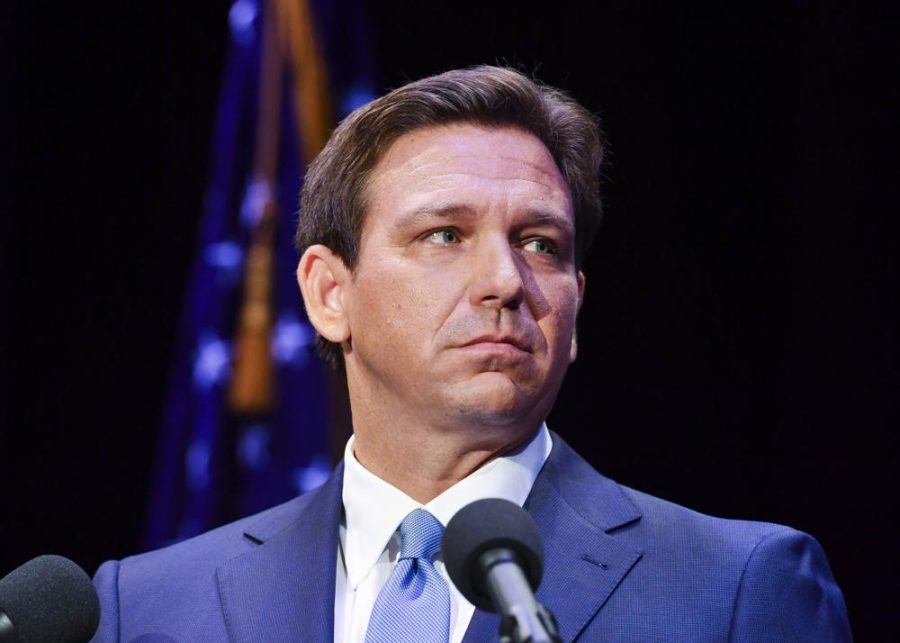
On the state level, Gov. Ron DeSantis rejected the idea of temporarily lifting the state tax on gas.
Democrats in the state Legislature asked the governor to lift the state tax, but DeSantis said “I don’t know that there’s going to be any simple fix” and that the issue needs to be addressed on the federal level, as reported by NBC Miami.
___
For more information or news tips, or if you see an error in this story or have any compliments or concerns, contact [email protected].