


The University of North Florida’s Board of Trustees unanimously approved the final 10-year campus master plan and discussed implementing new AI practices in UNF classrooms.
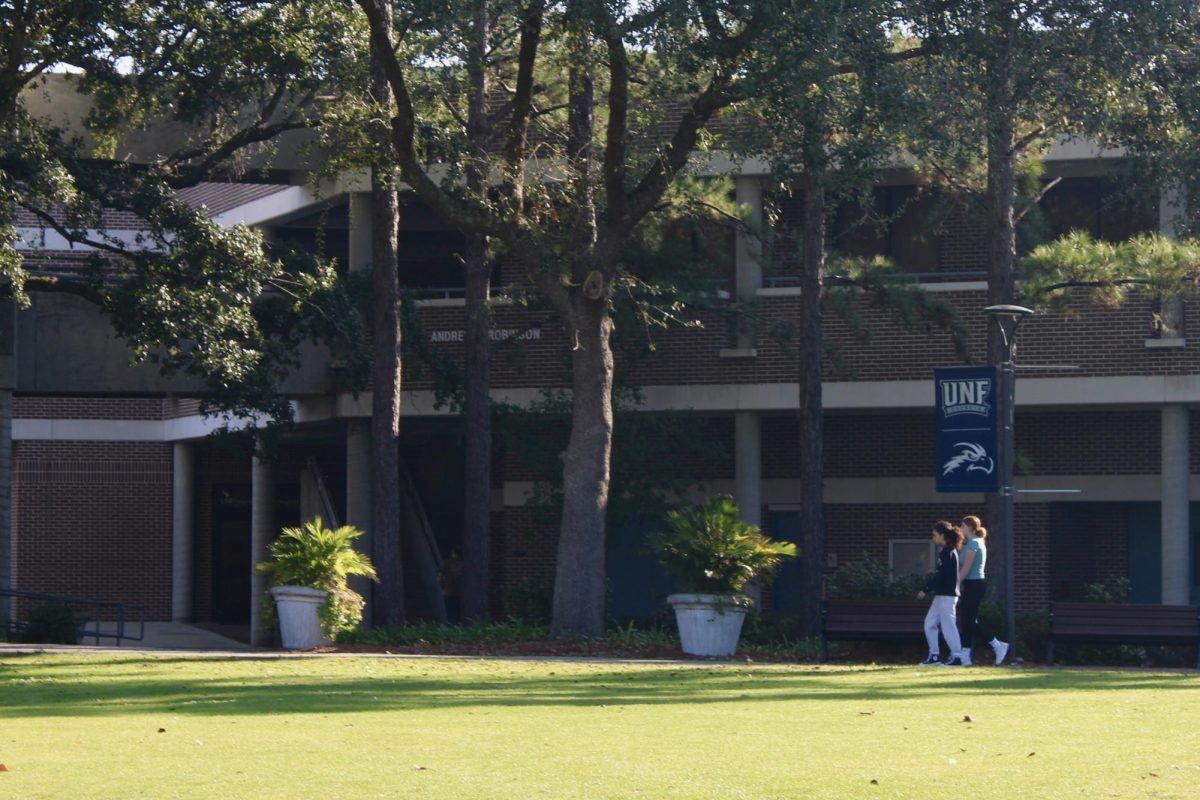
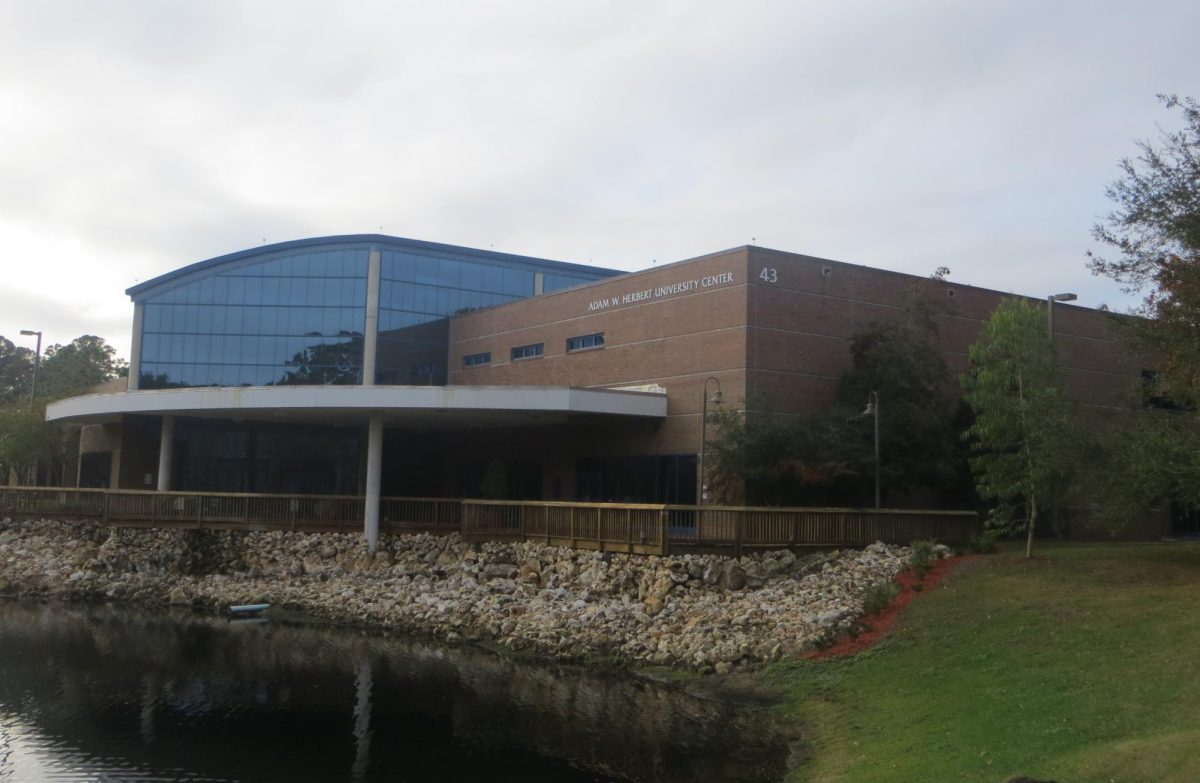
The ten-year master plan includes new residence halls, apartment-style complexes, a proposed football stadium and Greek village, among other campus developments. During Monday’s meeting, the only significant amendment made to the final draft of the UNF master plan called for the inclusion of a roundabout to accommodate for increased traffic congestion.
The BOT agenda outlined an “AI Retreat” in which members of the UNF AI Council discussed the use of AI in the classroom and its growing role at UNF. Trustee members expressed their support for the “innovative” initiative, which promises AI certificates, digital badges and “AI-infused curriculum.”
Ten-year Master Plan
The campus master plan acts as a flexible outline for future infrastructure expansion on the UNF campus.
The final plan was presented by Angela Coullias, the senior campus planner from the consulting firm that developed the plan.
“This is the roadmap for your next 10 years,” said Coullias. “We want to make sure that it is feasible, realistic…and it also follows the BOG and SUS guidelines.”
Per BOG guidelines, state and local government regulatory agencies had to approve the master plan before the university.
Coullias clarified the only physical change made to the master plan would be its inclusion of a roundabout near Lot 2 and Lot 3 on UNF Drive to account for increased traffic congestion.
“Transportation services asked to include a roundabout,” said Coullias. “The only physical change was the addition of the roundabout…to help mitigate transportation concerns and roadway sequencing.”
The updated plan, including the roundabout on UNF Drive, is not yet available. However, Coullias assured the new plans would be available on UNF’s website soon.
AI at UNF
UNF AI Council member Dr. Josh Gellers spoke during the BOT meeting and addressed several concerns over UNF’s “AI Strategic Plan.” This plan of AI integration outlined digital badges, more certificates, and the “unofficial goal of infusing AI into all curriculum,” according to UNF AI Council member Brian Verkamp.
In the face of some faculty members’ resistance to AI usage, Gellers explained that a consensus on AI usage is not the goal.
“What we should strive to do is… focus on building a resilient campus that is able to respond to the consistent shocks that AI is providing on almost a monthly basis now,” said Gellers.
Gellers continued to explain that reaching a broad agreement on the use of AI would be “virtually impossible,” given the range of opinions on the matter. However, Gellers insisted that transparency between professors and students could be assisted through the use of AI, mentioning the syllabus management system, Simple Syllabus.
“We as faculty know that…we should be doing…whatever our standards are, communicating those clearly to our students so that they don’t walk in wondering what we’re supposed to be doing,” said Gellers.
“I think that moving to Simple Syllabus and having a plugin option for including language about AI is going to be actually very helpful for telegraphing what faculty expects to be able to know on day one when they enter those courses,” said Gellers.
UNF recently adopted the public, online program Simple Syllabus to align with state regulations that aim to standardize syllabi across courses while increasing transparency for students. Professors teaching credit-bearing courses will be required to use the platform beginning spring 2026.
In response to faculty’s fear of job loss and AI replacement, Gellers quotes Jensen Huang, CEO of NVIDIA, an AI technology company.
“You’re not going to lose your job to AI but you’re going to lose your job to someone who uses AI.”
As it was projected on the screen, President Moez Limayem took a photo of the quote with his cell phone.
___
For more information or news tips, or if you see an error in this story or have any compliments or concerns, contact [email protected].